For calendar-year nonprofits, Form 990 for tax year 2025 was due May 15, 2026, and that deadline has passed. If your organization filed Form 8868 on time, the extended deadline is November 16, 2026 (November 15 falls on a Sunday). If you missed the deadline with no extension, file now: the penalty runs $25 per day, and three consecutive missed years automatically revoke tax-exempt status.
Key takeaways:
- Original 2026 deadline (passed): May 15, 2026 for calendar-year organizations. Form 990, 990-EZ, 990-N, and 990-PF all shared it
- Extended deadline: November 16, 2026 if Form 8868 was filed by May 15
- Late-filing penalty: $25/day, capped at the lesser of $13,000 or 5% of gross receipts; $130/day up to $65,000 for organizations with gross receipts over $1,309,500
- Form 990-N (e-Postcard): no extension possible, but also no dollar penalty for late submission. A missed year still counts toward the three-year revocation clock
- Fiscal-year organizations: the return is due the 15th day of the 5th month after the fiscal year ends

| Deadline | What's Due | Status (July 2026) |
|---|
| May 15, 2026 | Form 990, 990-EZ, 990-N (e-Postcard), and 990-PF for calendar-year organizations | Passed. File now if you haven't |
| May 15, 2026 | Form 8868 extension request | Passed. Extensions can no longer be requested for calendar-year 2025 returns |
| Nov 16, 2026 | Extended Form 990, 990-EZ, 990-PF, 990-T (if Form 8868 was filed) | Upcoming (Nov 15 is a Sunday) |
| Quarterly | Estimated tax on unrelated business income (required if expected tax is $500+) | Ongoing |
Legal basis: IRC §6033 (filing requirements for exempt organizations), IRC §6652(c) (penalties for failure to file), IRC §6033(j) (automatic revocation for failure to file)
A July reader is in one of three situations. Find yours below.
Organizations that submitted Form 8868 by May 15, 2026 have until Monday, November 16, 2026 to file, because the six-month extension lands on Sunday, November 15. The extension covers Forms 990, 990-EZ, 990-PF, and 990-T. It did not extend the time to pay: any tax owed on unrelated business income was still due May 15, and interest accrues on an unpaid balance.
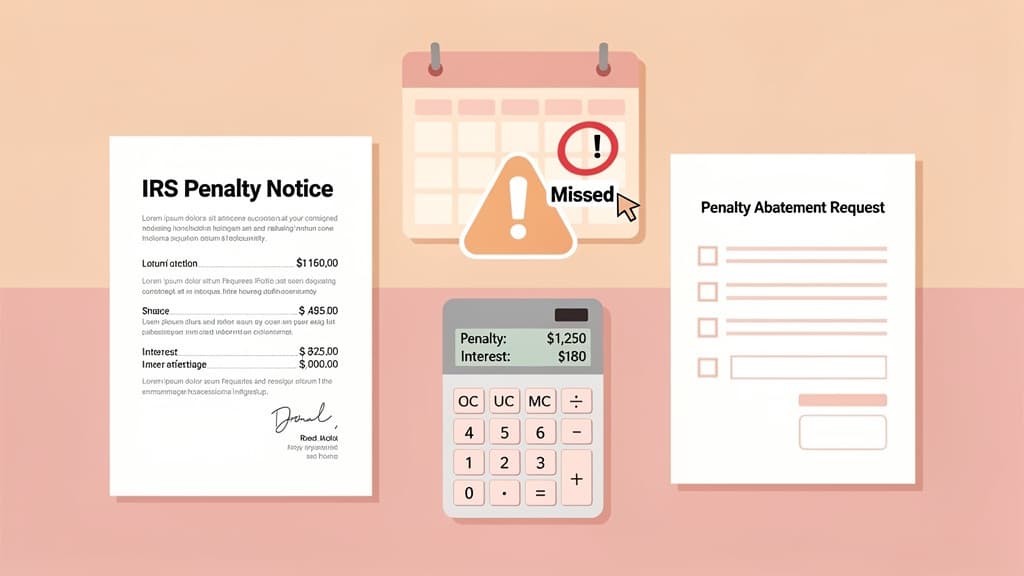
File the return as soon as you can. The penalty accrues at $25 per day for most organizations, and $130 per day if gross receipts exceed $1,309,500, until the IRS receives the return. A full Form 990 filed 60 days late already carries a $1,500 penalty. If circumstances beyond your control caused the delay, request reasonable-cause abatement with the late return.
The dollar penalty is not the worst outcome. A missed year counts toward the three-consecutive-years automatic revocation rule under IRC §6033(j). And if your organization qualifies for Form 990-N, there is no dollar penalty at all: submit the e-Postcard today so 2025 does not count as a missed year.
Form 990 is due the 15th day of the 5th month after your fiscal year ends; the May 15 date only applies to calendar-year organizations. Weekend and holiday shifts move several 2026-27 due dates:
| Fiscal Year End | Form 990 Due | Extended Deadline (Form 8868) |
|---|
| December 31, 2025 | May 15, 2026 (passed) | November 16, 2026 |
| March 31, 2026 | August 17, 2026 (Aug 15 is a Saturday) | February 16, 2027 |
| June 30, 2026 | November 16, 2026 (Nov 15 is a Sunday) | May 17, 2027 (May 15 is a Saturday) |
| September 30, 2026 | February 16, 2027 (Feb 15 is Washington's Birthday) | August 16, 2027 (Aug 15 is a Sunday) |
The IRS requires different versions of Form 990 depending on the size and type of your tax-exempt organization. Filing the wrong form — or no form at all — can trigger penalties or put your exempt status at risk.
Who files: Tax-exempt organizations with gross receipts normally ≤$50,000.
Due date: Form 990-N was due May 15, 2026 for calendar-year organizations, the same date as the full Form 990. The e-Postcard cannot be extended with Form 8868, but the IRS assesses no dollar penalty for submitting it late. If you missed May 15, file it now.
This is the simplest filing — completed entirely online through the IRS website, requiring only your EIN, tax year, legal name and address, principal officer info, and confirmation that gross receipts are normally $50,000 or less. There is no paper version.
Despite its simplicity, many small organizations fail to file it. Zero revenue? Still file it. The three-year automatic revocation rule applies to all filing-required organizations, regardless of size.
Who files: Tax-exempt organizations with gross receipts less than $200,000 AND total assets less than $500,000.
Form 990-EZ is a shorter version of the full Form 990 covering basic financial information: revenue, expenses, net assets, and officer/director compensation. You must meet both thresholds to use the 990-EZ — if either exceeds the limit, file the full Form 990.
Who files: Tax-exempt organizations with gross receipts ≥$200,000 OR total assets ≥$500,000.
The full Form 990 requires comprehensive financial statements, compensation details, mission and activity descriptions, and governance policies. Most organizations that file the full 990 hire an accountant or have professional staff preparing the return.
Who files: All private foundations, regardless of financial size.
All private foundations must file Form 990-PF, regardless of revenue. This form also calculates the excise tax on net investment income. Even inactive private foundations must file or face the same penalties and revocation risks as any other exempt organization.
| Your Organization | Gross Receipts | Total Assets | Form to File |
|---|
| Public charity | ≤$50,000 | Any | 990-N |
| Public charity | <$200,000 | <$500,000 | 990-EZ |
| Public charity | ≥$200,000 | Any | 990 |
| Public charity | Any | ≥$500,000 | 990 |
| Private foundation | Any | Any | 990-PF |
Form 990 is due the 15th day of the 5th month after the end of the organization's fiscal year. For organizations operating on a calendar year (January 1 – December 31), that meant May 15, 2026, and the date has passed.
In 2026, May 15 fell on a Friday, so no weekend or holiday shift applied. The same due date covers all 501(c)(3) nonprofit tax returns in the 990 series: Form 990, 990-EZ, 990-N, and 990-PF.
If your organization uses a different fiscal year, calculate accordingly (e.g., fiscal year ending June 30, 2026 → deadline November 16, 2026; fiscal year ending September 30, 2026 → deadline February 16, 2027; see the fiscal-year table above for the weekend and holiday shifts).
Form 8868 (Application for Automatic Extension of Time To File an Exempt Organization Return) gives an automatic 6-month extension — no reason required. For calendar-year organizations, the extended deadline is November 16, 2026, because November 15 falls on a Sunday.
- Request deadline (passed): Form 8868 had to be filed by the original due date, May 15, 2026 for calendar-year organizations. It cannot be filed retroactively.
- What it covers: Forms 990, 990-EZ, 990-PF, and 990-T.
- What it does NOT cover: Form 990-N. The e-Postcard cannot be extended (there is also no dollar penalty for submitting it late).
- Does not extend payment deadlines: Tax owed (e.g., on unrelated business income) was still due by the original deadline; interest accrues on unpaid amounts.
- Electronic filing: File Form 8868 electronically for the fastest confirmation.
Use the extra time to get the return right — not to start preparing it from scratch six months late.
Form 990 is a comprehensive disclosure document covering how a tax-exempt organization operates. Key areas include:
- Revenue and expenses — All income sources and how money was spent (program services, management, fundraising)
- Compensation — Salaries and benefits for officers, directors, key employees, and the five highest-compensated employees
- Governance — Board composition, conflict of interest policies, whistleblower and document retention policies
- Program accomplishments — Descriptions of the three largest programs by expense
- Financial statements — Balance sheet at the beginning and end of the year
- Schedule A — Public charity status and public support test (required for 501(c)(3) public charities)
- Schedule B — Schedule of Contributors (contributions of $5,000+ from a single contributor; not publicly disclosed for most organizations)
- Schedule O — Supplemental Information (required for all Form 990 filers)
For returns required to be filed in 2026, the late-filing penalty is $25 per day for most organizations and $130 per day for organizations with gross receipts over $1,309,500 (Rev. Proc. 2024-40, IRC §6652(c)).
Organizations with gross receipts of $1,309,500 or less:
- $25 per day for each day the return is late
- Maximum penalty: the lesser of $13,000 or 5% of gross receipts
Organizations with gross receipts exceeding $1,309,500:
- $130 per day for each day the return is late
- Maximum penalty: $65,000
These penalties are assessed against the organization, not against individual officers. However, if the return remains unfiled after an IRS written demand, the IRS can also charge the responsible person $10 per day, up to $6,500 (IRC §6652(c)(1)(B)).
The amounts adjust annually for inflation. For returns required to be filed in 2027 (relevant for fiscal-year organizations), the daily rates stay at $25 and $130, but the large-organization threshold rises to $1,339,500 and the maximum to $66,500 (Rev. Proc. 2025-32).
A small community nonprofit with $80,000 in gross receipts that files 60 days late: 60 × $25 = $1,500 penalty. Its cap is 5% of gross receipts, or $4,000, so the meter keeps running for another 100 days if it waits.
A larger nonprofit with $2 million in gross receipts that files 60 days late: 60 × $130 = $7,800 penalty.
For a small nonprofit, a $1,500 penalty could represent a meaningful portion of the annual budget. Filing the e-Postcard (990-N) takes minutes and costs nothing.
The IRS may abate penalties if the organization demonstrates reasonable cause — circumstances beyond its control and not willful neglect. "We didn't know we had to file" is generally not considered reasonable cause.
If a tax-exempt organization fails to file its required Form 990 (or 990-EZ or 990-N) for three consecutive years, its tax-exempt status is automatically revoked under IRC §6033(j). This is not discretionary — the IRS does not evaluate the circumstances. Hundreds of thousands of organizations have been revoked since this rule took effect in 2011.
- Income becomes taxable. The organization must file Form 1120 and pay federal income tax from the date of revocation.
- Contributions may not be deductible. Donors who contribute after revocation may not be able to deduct those contributions.
- Public record. Revoked organizations appear on the IRS Auto-Revocation List, which is publicly searchable.
- Reapplication required. The organization must file a new application (Form 1023 or 1023-EZ for 501(c)(3)s, or Form 1024 for other types) and pay the applicable user fee.
- Retroactive reinstatement is limited. The IRS offers retroactive reinstatement only under specific circumstances, typically requiring reasonable cause for all three years of non-filing.
Organizations can verify their current exempt status through the IRS Tax Exempt Organization Search (TEOS) tool at irs.gov.
The Form 1023 user fee is $600, and the Form 1023-EZ user fee is $275, per the current IRS fee schedule. Both are paid through Pay.gov when the application is submitted, and the IRS treats the fee as nonrefundable. Form 1023-EZ is limited to smaller organizations (projected gross receipts of $50,000 or less and assets of $250,000 or less), so many revoked organizations reapplying after growth must use the full Form 1023 at $600.
Tax-exempt organizations can lose part of their tax advantage if they generate substantial income from activities unrelated to their exempt purpose.
If a tax-exempt organization has unrelated business taxable income (UBTI) exceeding $1,000, it must file Form 990-T (Exempt Organization Business Income Tax Return) and pay tax on that income at regular corporate tax rates.
Unrelated business income is income from a trade or business that is regularly carried on AND not substantially related to the organization's exempt purpose.
Common examples of UBTI: advertising revenue in a nonprofit publication, rental income from debt-financed property, and revenue from commercial activities unrelated to the mission.
Common exclusions from UBTI: dividends/interest/royalties (generally excluded), rental income from real property (if not debt-financed), revenue from activities conducted primarily by volunteers, and revenue from selling donated merchandise.
Form 990-T follows the same deadline as Form 990 — the 15th day of the 5th month after the fiscal year-end. For calendar-year organizations that was May 15, 2026, extended to November 16, 2026 if Form 8868 was filed.
If the organization expects to owe $500 or more in tax on UBTI, it must make quarterly estimated tax payments using Form 990-W as a worksheet. The quarterly dates for calendar-year organizations are April 15, June 15, September 15, and December 15.
Federal Form 990 filing is only part of the compliance picture. Approximately 40 states and the District of Columbia require organizations that solicit charitable contributions to register before soliciting and to file annual financial reports.
What to know:
- Some states accept a copy of the federal Form 990 as the annual report; others require a separate state-specific form (e.g., California Form RRF-1, New York CHAR500)
- Registration deadlines and renewal periods differ by state
- Penalties for failing to register can include fines and prohibitions on fundraising in that state
- Federal tax-exempt status does not automatically confer state tax exemption — some states require a separate application
- The Unified Registration Statement (URS) is now accepted by fewer than 20 states for initial registration, and several of those require supplemental state forms — check each state's current filing method before relying on it
If your organization solicits donations in multiple states — including online fundraising — verify your registration obligations in each one.
Unlike most tax returns, Form 990 is a public document. Tax-exempt organizations must make their Form 990 (or 990-EZ, 990-PF) and their exemption application (Form 1023 or 1024) available for public inspection.
Where the public can find your 990:
- Your organization — Must provide copies upon request (in-person same day; written requests within 30 days)
- GuideStar / Candid (guidestar.org) — The most widely used database of nonprofit information
- ProPublica Nonprofit Explorer (projects.propublica.org/nonprofits) — Free searchable database with full 990 PDFs
Because your 990 is public, donors, foundations, journalists, and regulators all use it to evaluate your organization. Treat it as a public-facing document — a well-prepared 990 with clear program descriptions can serve as an effective communication tool.
Tax-exempt status means no federal income tax on exempt-function income. It does not mean no filing obligations. Every tax-exempt organization recognized by the IRS must file some version of Form 990 annually — even with zero revenue, zero expenses, and zero activity.
Small, volunteer-run organizations are most vulnerable. A board member who handled the filing leaves, a new treasurer assumes "someone is taking care of it," and three years pass. Result: automatic revocation with no warning. The organization must reapply ($275–$600 user fee) and deal with taxable income for the revocation period.
Organizations with advertising revenue, debt-financed rental income, or other unrelated commercial activities must file Form 990-T and pay tax on that income. Many nonprofits don't realize this requirement exists. The penalties match those for failing to file any corporate tax return.
An organization can be perfectly compliant with federal requirements and still violate state law. If you solicit donations — including online — in states where you haven't registered, you may face fines or cease-and-desist orders.
Jupid connects to your organization's bank accounts and automatically categorizes transactions with 95.9% accuracy, giving you a clear picture of revenue and expenses throughout the year. For nonprofits with potential UBTI, Jupid identifies income streams that may trigger Form 990-T filing requirements — so you're not surprised at year-end.
Jupid's AI accountant is available through WhatsApp and iMessage. Board treasurers and executive directors can check financial status without logging into accounting software. Ask "Do we have any unrelated business income?" and get answers based on actual bank data.
The platform works through a web interface, Claude Code, and other AI tools. Racing the November 16 extension deadline or catching up on a late return, you hand your preparer financial data that is already organized.
Connect your bank to Jupid and keep your nonprofit's finances organized year-round.
- IRC §6033 — Returns of exempt organizations (filing requirements)
- IRC §6033(j) — Automatic revocation for failure to file for 3 consecutive years
- IRC §6652(c) — Penalties for failure to file information returns by exempt organizations
- IRC §§511–514 — Unrelated business income tax (imposition, exceptions, definitions, debt-financed income)
- IRC §4940 — Excise tax on net investment income of private foundations
| Item | Amount |
|---|
| Original deadline (calendar-year orgs) | May 15, 2026 (passed) |
| Extended deadline (Form 8868) | November 16, 2026 |
| Form 990-N threshold | Gross receipts ≤$50,000 |
| Form 990-EZ threshold | Gross receipts <$200,000 AND total assets <$500,000 |
| Form 990 threshold | Gross receipts ≥$200,000 OR total assets ≥$500,000 |
| Late filing penalty (returns due in 2026) | $25/day, max lesser of $13,000 or 5% of gross receipts |
| Late filing penalty (large orgs) | $130/day, max $65,000 |
| Gross receipts threshold for large-org penalty | $1,309,500 |
| UBTI filing threshold | $1,000 |
| Automatic revocation trigger | 3 consecutive years of non-filing |
| Form 1023 user fee | $600 |
| Form 1023-EZ user fee | $275 |
Filing Form 990 is not optional for tax-exempt organizations, regardless of size. The 2026 deadlines were straightforward: May 15 for calendar-year filers, extended to November 16 with Form 8868. The consequences of ignoring them are not. Three missed years and your exempt status is gone.
Form 8868 only works if filed by the original deadline, so for calendar-year 2025 returns that window closed on May 15, 2026. If your return is still unfiled with no extension, submitting it now is the only way to stop the $25-per-day penalty. For organizations with potential unrelated business income, track it throughout the year so you're not surprised at filing time.
For more business tax deadlines, see our complete 2026 business tax deadline calendar and tax extension guide.
Disclaimer
This article provides general information about Form 990 filing requirements and should not be considered tax or legal advice. Filing requirements vary by organization type, fiscal year, and specific circumstances. Penalty thresholds are subject to annual inflation adjustments. Consult a qualified tax professional or refer to IRS Publication 557 for guidance specific to your organization.
Tax Year: 2026
Last Updated: July 11, 2026